New Chitose Airport to Niseko: A Winter Transfer Guide
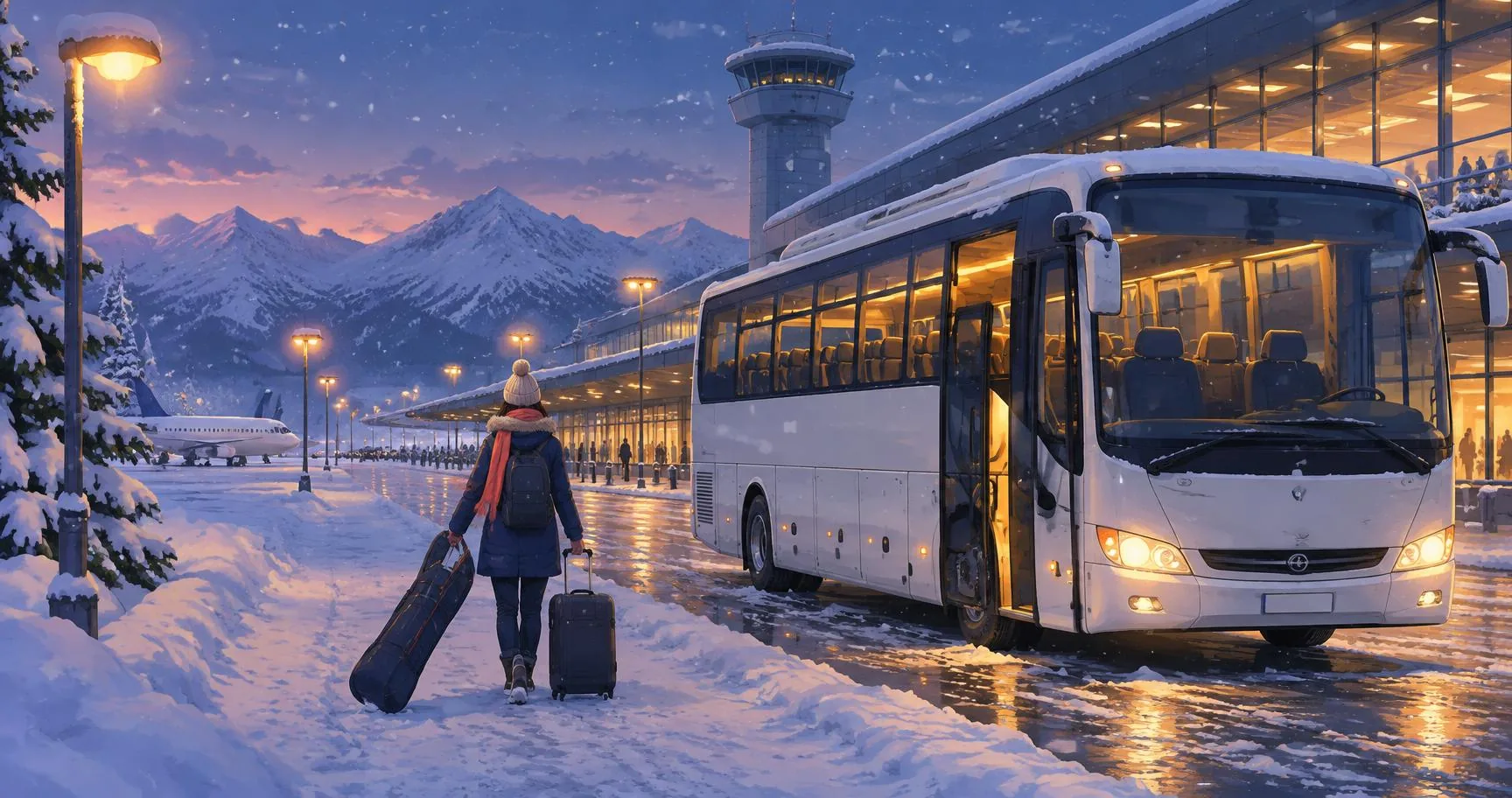
A coach seat to Niseko gets you to a drop-off point. It doesn't necessarily get you to your door, especially when you land after dark with skis and the snow is coming down.
The short answer
Book a direct coach if your flight lands with plenty of time before a departure and the coach stops close to your lodging. If the timings don't work, book a private transfer or a night near the airport instead. Before you book anything, ask your property which stop to use and whether it offers pickup from that stop.
Before you book: terminal, baggage and buffer
New Chitose Airport has a domestic and an international terminal, connected by walkways inside the buildings, according to JNTO’s New Chitose Airport guide. Check which terminal your flight uses and where your coach operator's desk or meeting point is.
Arriving on an international flight means immigration and customs before you reach the arrivals hall, then possibly a wait for oversized baggage such as ski bags. The Hokkaido Resort Liner page for New Chitose Airport to Rusutsu and Niseko lists recommended connection times by flight type and asks passengers to reach the airport meeting point 15 minutes before departure. It also states that the bus won't wait for passengers who arrive late, and that the operator doesn't check your connection time for you. Treat those figures as that operator's guidance, not a universal rule, and give yourself more room if your flight is often delayed.
The same page lists airport-to-Niseko service from 1 December 2026 to 30 March 2027, and Niseko-to-airport service from 2 December 2026 to 31 March 2027. Some individual buses run on narrower dates, so check the exact departure you want on the booking page instead of assuming every time runs every day of the season. All courses need a reservation, and the operator says it carries one set of ski equipment and one piece of luggage per person, with skis or boards in a case or bag.
Niseko United lists 28 November 2026 as the planned opening for all four ski areas, subject to conditions. If you arrive 28–30 November, the Hokkaido Resort Liner service described here hasn’t started yet. Confirm another coach, rail and a final transfer, or a private transfer before you fly.
Four ways to make the transfer
Niseko Tourism’s arrival guide lists direct winter coaches from the airport, train routes and private transfer options.
| Option | Best when | Check before booking |
|---|---|---|
| Direct coach | Your flight lands well before a departure | The exact drop-off stop for your lodging |
| Private transfer | You land late, carry bulky gear or travel as a group | Where the driver meets you and how long they wait if your flight is delayed |
| Train plus final transfer | You're happy to change and carry your bags | Current train times and how you'll cover the last stretch |
| Night near the airport | You land late and no onward ride is confirmed | Cancellation terms and next-morning departures |
Rail isn't a door-to-door option for most visitors: Niseko Tourism notes that trains run towards Kutchan Station, with a transfer by bus or taxi from there, and only limited direct services to Niseko Station.
Example: a late landing with ski bags
Picture this (purely illustrative): you land in the evening on an international flight, carrying a ski bag, with your coach and flight booked separately. If the flight runs late you could miss your coach, and the coach won't wait for you.
A better plan is to agree a backup before you travel. That could be a private transfer you can confirm for a later time, a cancellable airport hotel, or a later coach if one exists that day. Tell your lodging your arrival plan and what you'll do if it changes, rather than assuming a late check-in will be fine.
Save these before you fly
Keep these offline on your phone, with a copy on paper or in another app:
- Flight and coach or transfer booking confirmations
- The name of your drop-off stop, including the Japanese name if your lodging gives you one
- Your lodging's address, phone number and check-in instructions
- The operator's contact details for delays
Mobile data is useful for checking your booking or messaging your lodging when you land, but don't rely on it for your only copy of anything. If you're comparing travel eSIMs, our Japan eSIM guide explains what to check, and you can see the current plans on our Japan eSIM page. Still deciding on dates? Read when to visit Tokyo and Hokkaido in winter.
Once your stop, timing and backup are settled, a direct coach is often the simplest route. If any of the three is unclear, sort out a private transfer or an airport night before you fly.
More in Destination Guides
London to Edinburgh in Winter: Which Train Leaves Time for Daylight?
A lunchtime train arrival and a mid-afternoon arrival are very different in Edinburgh in December. Work backward from sunset and save the right things offline.

Sydney Beach Day Without a Car: Bondi or Manly?
One beach, one route and one backup. Here’s how to choose between Bondi and Manly on a December or January day in Sydney.

Cappadocia in Winter: What If Your Balloon Flight Is Canceled?
Book the first full dawn, keep a spare, and make Cappadocia worth the trip even if the balloons stay on the ground.