Airport SIM or Travel eSIM: Which Should You Choose?
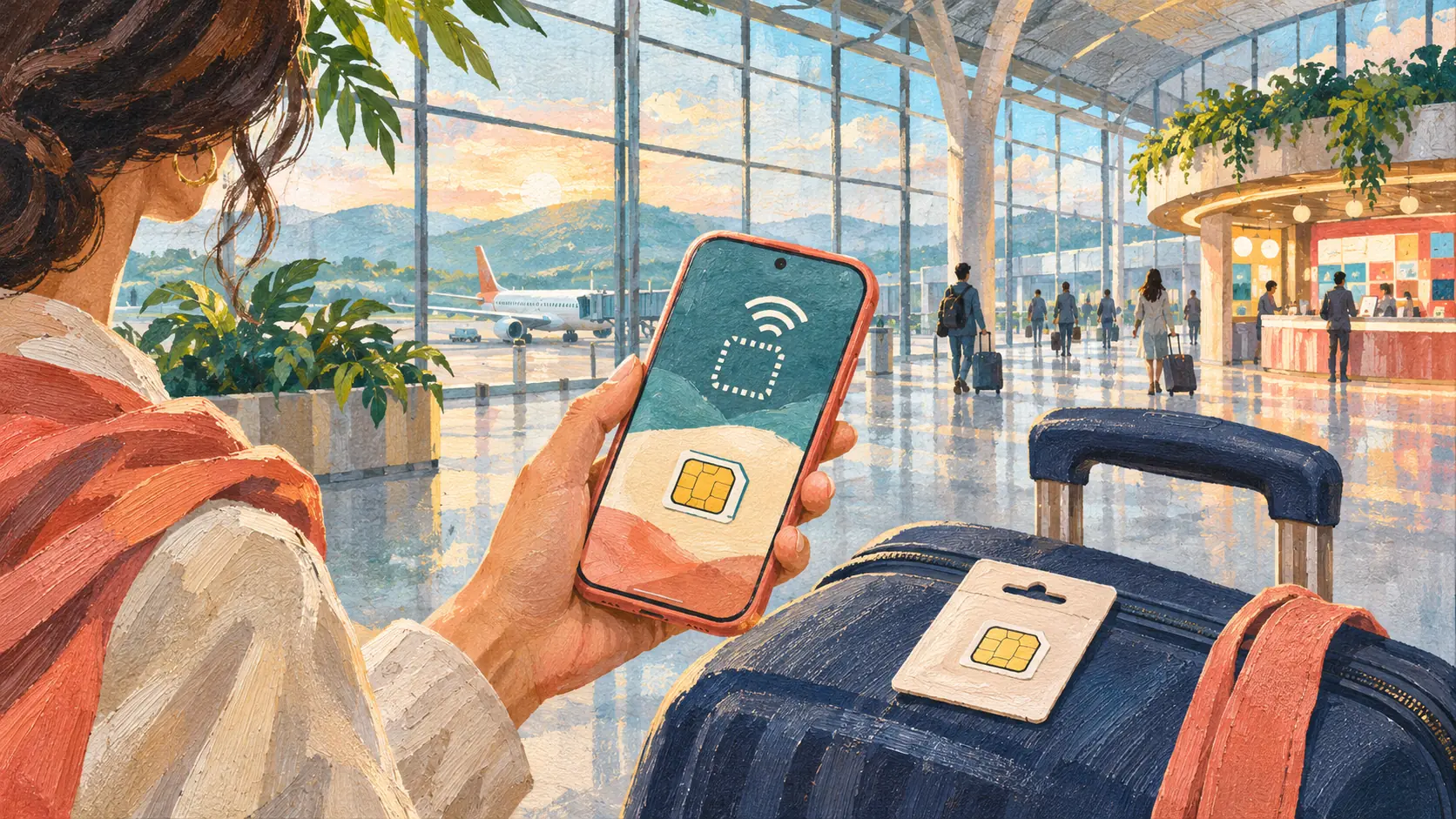
You have cleared immigration, found your suitcase and spotted a SIM counter on the way out. Do you stop there, or turn on the travel eSIM you arranged before the flight?
Both can be sensible choices. The better one depends on your phone, whether you need a local number and how much you want to organise before landing. Comparing those details is more useful than assuming airport plans are always expensive or online eSIMs are always better.
The short answer
A travel eSIM bought before departure can suit an unlocked, compatible phone when you want to prepare your data connection in advance. Buying at the airport can suit someone who needs a physical SIM, wants help at a counter or has found a local plan with the right calling features. Compare the exact packages, total cost and arrival logistics before deciding. Neither buying route guarantees the lowest price or the best signal.
First, separate where you buy from what you buy
“Airport SIM” describes a place to shop. “eSIM” describes how the mobile service is installed on your device. An airport seller may offer eSIMs, and a local mobile operator may let you buy one online before travelling.
For example, Changi Airport's official SIM guide lists tourist SIM sellers and describes both physical SIM and eSIM options. The real choice is broader than a plastic card at arrivals versus an international eSIM website.
You may be comparing:
- A physical tourist SIM bought or collected at the airport.
- A local operator's eSIM bought online or at a counter.
- A country or regional travel eSIM bought before departure.
- Your existing carrier's roaming package, if it already meets your needs.
Keep all suitable options in the comparison until you have checked the terms.
Let your phone rule out the wrong options
Check your exact phone model and where it was purchased. A model family name alone does not establish eSIM support, and a phone that supports eSIM may still be locked to its original carrier.
Apple's international eSIM guidance explains that an iPhone must be unlocked to use another carrier. Android requirements depend on the model and carrier. Use the ElloSim compatibility checker before purchasing an ElloSim plan.
If your phone does not support eSIM but has a usable physical SIM slot, a physical tourist SIM may be the practical option. If it is an eSIM-only model, a physical SIM from a counter will not help. Ask the seller for the format your device can actually use.
For a phone with one physical slot, consider what happens when you remove the home SIM. You cannot receive its normal cellular calls or texts while it is out of the phone. Keep the card somewhere secure and plan for any verification messages you might need.
Compare usable service, not the largest data number
A large allowance can look attractive while hiding the detail that matters to your trip. Put the two packages side by side and ask:
- Where can I use the data? Check each destination and any separate domestic or roaming allowance. Data labelled for one country may not be available on your next stop.
- How long does it last? Count through the journey to your departure airport, then check what starts the validity period.
- Can I make the calls I need? Confirm whether the package includes a number, ordinary calls and SMS, rather than just internet access.
- What are the speed and sharing conditions? Check high-speed limits, any reduced-speed period and whether the exact plan allows hotspot use.
- What is the final cost? Compare the same currency and account for the days, data and features you will genuinely use.
Our seven-day data guide can help you estimate an allowance. If one option says unlimited, use the fixed-data versus unlimited comparison to check what that means before treating it as a better deal.
The number of gigabytes does not tell you how well either plan will work inside your hotel or along a rural route. Check the named networks and relevant coverage information when available. Avoid choosing on an unsupported “fastest” claim.
When arranging an eSIM before flying makes sense
Preparation is valuable when you want fewer decisions at arrivals. You can compare packages with time to read the details, check your device and find the installation instructions without balancing your phone on a suitcase.
Buying, installing and starting the plan may happen at different times. Read the selected plan's instructions before scanning anything. Check the activation deadline and whether installation itself starts the validity. Our activation timing guide explains those separate steps.
If advance installation is allowed, use a dependable internet connection and leave time for questions. Save the order details and setup instructions where you can find them. Being prepared still does not guarantee an immediate connection when you land: you may need to select the right data line, apply its roaming setting and wait for a supported network.
Keep your first hotel address and transfer instructions offline as a fallback. For a destination-specific example, the Japan preflight checklist covers the phone and arrival details worth saving before departure.
When an airport counter may be worth the stop
An airport purchase can be useful if a physical SIM fits your phone, a local package has calling features you need, or you prefer asking setup questions in person. Check what help the seller actually offers rather than assuming staff will configure every device.
Before relying on the counter, verify its terminal, location and opening hours through the airport or operator. A shop beyond immigration may not be reachable during an airside connection. An online collection voucher may also have different pickup locations from a normal walk-up purchase.
Check identification and registration requirements. Changi's guide, for example, says identification such as a passport is required for a local SIM purchase in Singapore. Requirements vary by destination and product; an eSIM format does not automatically remove them.
Save the seller's receipt and support details. If a problem appears later, you will want to know who supplied the plan and how to reach them after leaving the airport.
Make one decision before the flight
Choose the option that solves your actual arrival problem. If you need a local calling package and a compatible physical SIM, confirm a suitable airport seller. If your phone supports the chosen travel eSIM and you want to prepare ahead, compare ElloSim's destinations and check the exact plan before installing.
For a multi-country trip, include every stop in that decision. The Europe route checklist shows why a regional name is not enough to establish coverage.
Finally, read the seller's cancellation and refund terms before installation. ElloSim's refund policy makes installation and activation relevant to eligibility, so treat those steps as something to check before proceeding. A few minutes of comparison at home can save a much less comfortable decision beside the arrivals doors.
More in eSIM Advice

Morocco eSIM: Choosing Data for City Stays and Desert Trips
Choose a Morocco eSIM for your city days and desert excursion, with checked prices, a worked data budget and practical limits on what network listings tell you.
Buying a Travel eSIM for Someone Else: What to Check
Help a traveler get connected without buying the wrong plan. Check their phone, dates, delivery arrangements and installation timing before paying.

Do You Need a 5G Travel eSIM, or Is 4G Enough?
4G can suit everyday travel tasks. Find out when 5G is worth choosing, which compatibility and coverage checks matter, and why the plan's other terms still count.