South Korea in Winter: Seoul City Break or Ski Trip?
The short answer
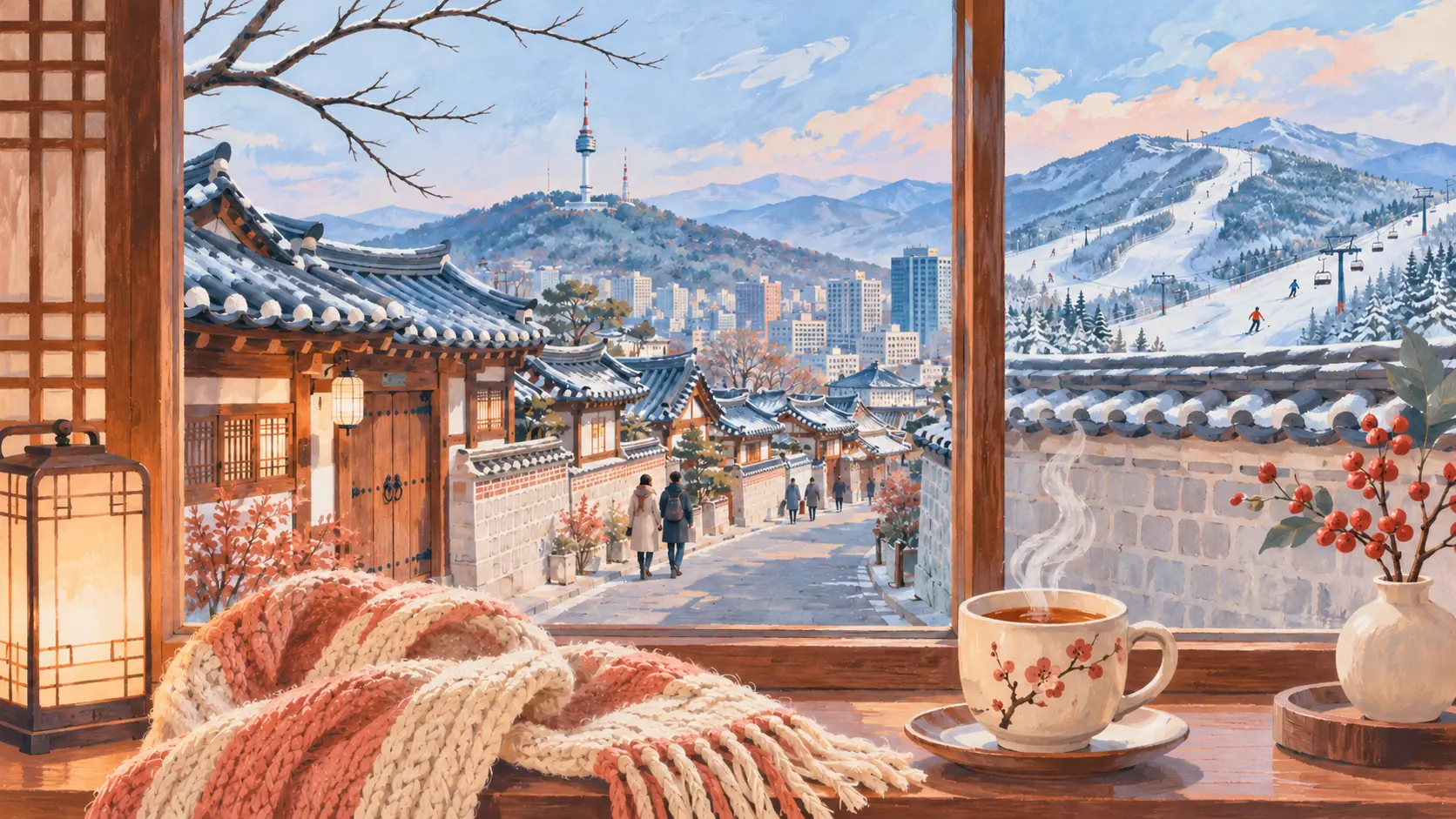
December to February is South Korea’s winter travel season. Choose Seoul if you want a city break built around food, shopping and sightseeing, with warm indoor stops between outings. Choose a ski-focused trip if time on the slopes is the reason you are travelling. For that holiday, the resort’s confirmed operating schedule matters more than the month on your flight ticket.
A snowy photograph of Seoul is not a promise that the city will look that way during your visit. Plan a trip you would still enjoy without fresh snow.
Decide what you want from winter
It is tempting to book Seoul first and work out the snow activities later. That can suit a city holiday with one optional day trip. It is less sensible when several days of skiing are the main goal.
Use this comparison before choosing your accommodation:
| Your priority | A practical starting plan | What to check first |
|---|---|---|
| Food, shopping and city sights | Stay in Seoul and group outings by neighbourhood | Opening hours and indoor alternatives |
| Trying skiing for the first time | Compare a planned ski day with a short resort stay | Lessons, rental equipment and return transport |
| Several days on the slopes | Give the resort its own block of nights | Operating slopes, suitable terrain and accommodation |
| City sightseeing plus skiing | Split the trip between two bases | Transfer time and where your luggage will go |
The table is a planning recommendation, not a ranking of destinations. A good answer for one traveller may be a poor fit for someone who dislikes long transfers or cold outdoor days.
What December, January and February change
The Korea Tourism Organization describes winter as cold and dry and identifies January as the coldest month. Its climate guide is useful background, but it is not a forecast for a particular week.
For a Seoul break, December and February are worth comparing with January if avoiding the coldest part of winter matters to you. Neither is reliably warm. Choose dates you can comfortably dress for, then build a day that does not depend on spending every hour outside.
For skiing, KTO identifies December to February as the main season. However, its ski-resort guide warns that opening schedules and individual slope operations depend on weather and snow maintenance. A resort being open does not necessarily mean every slope, lesson or activity you want is available.
Before paying, check the resort’s own current information for your dates. Do not use last winter’s opening announcement as confirmation for this winter.
Make Seoul comfortable, not exhausting
A winter city itinerary works better when the warm stops are part of the plan rather than emergency escapes from the cold.
Choose one area for the morning, a nearby lunch and an indoor afternoon option. Avoid crossing the city several times to connect attractions that looked close together on a list. You can still have a full day without making every meal or museum visit another long journey.
For example, a hypothetical sightseeing day might include one outdoor cultural stop, lunch nearby and a museum or shopping visit afterwards. Keep an optional evening outing instead of committing to it in advance. If the wind or temperature makes the outdoor portion unpleasant, shorten it without losing the rest of the day.
Pack layers that are easy to adjust. KTO’s month-by-month guide recommends a heavy coat, thermal layers, gloves, a hat and boots for winter, while noting that indoor spaces are heated. Think about both ends of the day: standing outside for transport and sitting indoors for a meal.
For a first ski trip, book the whole day
A lift ticket alone is not a complete plan for someone who has never skied.
Check whether the booking includes equipment, suitable clothing, a lesson and access to the area you will use. Ask about lesson language and ability level. Also check what a non-skier in your group can do without assuming every advertised facility operates on the same schedule.
Write down the collection point, departure time and last return option. KTO recommends arranging resort accommodation and shuttle buses ahead during the winter peak. Compare the full cost and timetable rather than choosing from the headline ticket price.
If you want several days of skiing, our recommendation is to compare a resort stay with repeated day trips from Seoul. The better choice depends on the transfer, your luggage and how much city time you actually want. Do not squeeze the final ski session against an international flight departure.
Check holidays before fixing transfers
Seollal, the Lunar New Year holiday, falls in January or February depending on the year. KTO notes that trains and buses become busy and some businesses close.
Check the official dates for the year you are travelling before locking in a multi-stop itinerary. This guide deliberately does not carry forward dates from an earlier winter. If your visit overlaps the holiday, confirm transport and opening hours for the specific days you need them.
Prepare the phone before the cold arrival
Save your accommodation address, transfer booking and resort collection instructions where you can reach them without a connection. Keep your phone accessible without having to unpack everything at the kerb.
For mobile data, check the exact plan’s coverage, validity and activation rule. A country-wide listing is not a guarantee of reception on every mountain route. Use our seven-day data guide to estimate your allowance from the tasks you expect to do, and read when to activate a travel eSIM before installation.
Once your route is settled, compare the current South Korea eSIM plans. Sort the practical details before departure, then leave some room in the itinerary to enjoy the winter you actually get.
Sources checked on 17 November 2026. Seasonal guidance is not a short-term forecast; verify current weather, resort operations and transport before travelling.
More in Destination Guides
London to Edinburgh in Winter: Which Train Leaves Time for Daylight?
A lunchtime train arrival and a mid-afternoon arrival are very different in Edinburgh in December. Work backward from sunset and save the right things offline.

Sydney Beach Day Without a Car: Bondi or Manly?
One beach, one route and one backup. Here’s how to choose between Bondi and Manly on a December or January day in Sydney.

Cappadocia in Winter: What If Your Balloon Flight Is Canceled?
Book the first full dawn, keep a spare, and make Cappadocia worth the trip even if the balloons stay on the ground.