Grand Canyon South Rim in Winter: Shuttle or Drive?
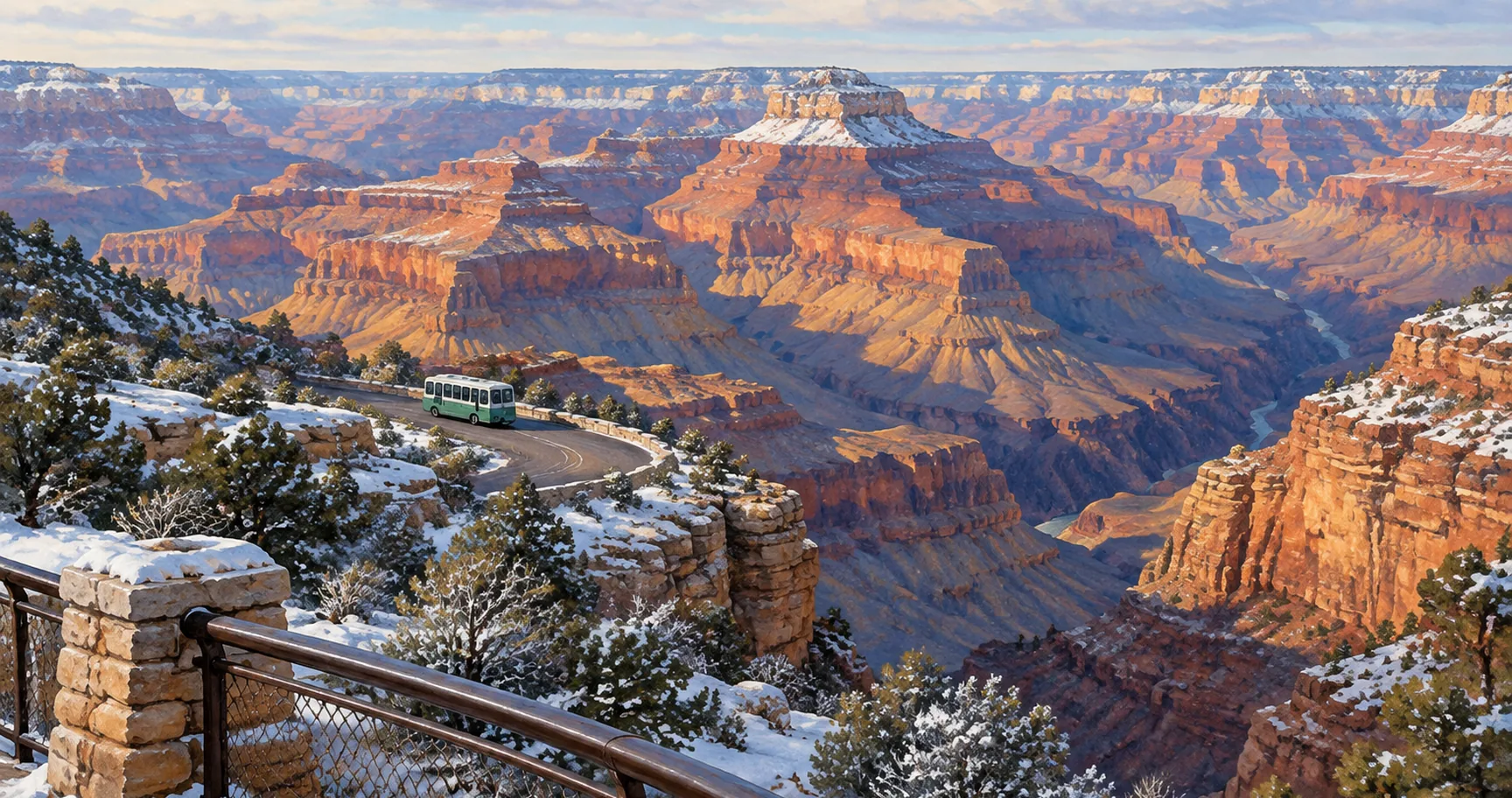
For a winter day at the South Rim, use the Visitor Center as your base and the free Blue and Orange shuttles for the village, Mather Point, Yavapai Geology Museum and Yaki Point. Drive Hermit Road only when it is open and conditions are suitable. The Red Hermit Road shuttle and the Tusayan Purple route are not winter services.
Shuttle or drive?
Use both—each for the job it actually does in winter.
| Plan | Winter choice | Why |
|---|---|---|
| Grand Canyon Village and Visitor Center | Village (Blue) shuttle | Connects the Visitor Center with lodges, campgrounds, the Backcountry Information Center and Market Plaza |
| Mather Point, Yavapai, South Kaibab Trailhead or Yaki Point | Kaibab Rim (Orange) shuttle | Provides the winter connection from the Visitor Center; Yaki Point is on the eastbound service |
| Hermit Road overlooks | Private car only if the road is open and safe | Private vehicles are normally permitted in December–February, but snow can close the road; do not expect the Red shuttle |
| Arriving from a hotel in Tusayan | Arrange transport into the park first | The Tusayan (Purple) route is closed outside the summer months |
The National Park Service shuttle page lists winter timetables from 1 December 2026 through 28 February 2027. Shuttle service is included with park admission, but buses can be delayed or suspended in poor weather.
Start at the Visitor Center
Parking once and using the Visitor Center Shuttle Bus Terminal makes the route choices much easier to understand. You are not choosing between two buses that cover the same stops.
Village (Blue): the practical connector
The Blue route loops between the Visitor Center and the village’s lodging, camping, Backcountry Information Center and Market Plaza areas. It is useful when your car is parked and you need services or a connection rather than a particular canyon viewpoint.
For the winter period, NPS lists operation from 08:00 to 20:00, with frequency varying through the day. Check the posted timetable at the stop and allow time to wait; a schedule is not a guarantee during a storm.
Kaibab Rim (Orange): the viewpoint route
The Orange route has two directions from the Visitor Center:
- Eastbound: Visitor Center → South Kaibab Trailhead → Yaki Point → Pipe Creek Overlook → Visitor Center.
- Westbound: Visitor Center → Mather Point → Yavapai Geology Museum → Visitor Center.
That distinction matters. If Yaki Point is your goal, board the eastbound service rather than assuming every Orange bus goes there.
The winter timetable lists service beginning at 08:00, with intervals changing through the day. NPS also lists a 19:12 last bus to the trailhead. That is a final departure toward the trailhead—not a promise of a later return pickup from Yaki Point. For a short winter visit, plan to be back well before darkness and confirm return arrangements at the stop rather than relying on the last number on the timetable.
When driving Hermit Road makes sense
Hermit Road is different. During the busy season, private vehicles are excluded and the Red shuttle provides motorized access. In winter, the NPS road-conditions page says Hermit Road is open to private vehicles during December, January and February—unless closed by snow.
So the decision is not “Red bus or car.” In this season, it is “car if the road is open and you are comfortable with the actual conditions, or leave it out.”
Before setting off:
- Check current NPS road alerts and conditions.
- Look at the weather, visibility and road surface—not just the date.
- Make sure you have enough fuel and a realistic return plan.
- Turn back if the route deteriorates or closes; do not continue because an overlook is on your itinerary.
Other South Rim roads can also close temporarily while snow is cleared. Desert View Drive, for example, is normally open year-round but can close for snow and ice. A winter plan should always have a shorter version.
Do not rely on Red or Purple
Two names from a summer map can cause avoidable winter mistakes:
- Hermits Rest (Red): the shuttle page’s winter operation covers Blue and Orange, not the Red route. Do not arrive at Hermit Road expecting a winter Red bus.
- Tusayan (Purple): marked closed and described as operating only during summer months.
If you sleep in Tusayan, the Purple route will not bridge the gap between town and the South Rim Visitor Center in winter. Arrange your own transport into the park, then use Blue and Orange where they fit.
A simple one-day shape
This is a viewpoint plan, not a recommendation to hike below the rim.
- Arrive prepared: check NPS alerts, save the park map and confirm your lodging or onward reservation offline.
- Use the Visitor Center base: take the Orange westbound service for Mather Point and Yavapai, or eastbound for Yaki Point.
- Use Blue for village services: avoid moving the car for every short connection.
- Add Hermit Road only if suitable: drive it when open and conditions are manageable; otherwise keep the day to shuttle-served viewpoints.
- Leave margin: winter daylight is limited, queues can form and weather can interrupt buses or roads.
The NPS winter-visits guide confirms that the South Rim is open year-round, while emphasizing ice, snow and shorter days. Open year-round does not mean every road or path is always accessible. The North Rim is not a backup winter drive: its seasonal vehicle access is closed in winter.
At viewpoints, expect exposed ledges and potentially icy paths. Stay behind railings where provided, wear footwear appropriate for the conditions and abandon a walk if the surface feels unsafe. This guide does not recommend attempting an inner-canyon hike.
Save the useful information before arrival
Mobile coverage should never be the thing that decides whether you can find a stop or road update. Save the NPS map, your actual shuttle directions, road-status links and accommodation details for offline reading. Our offline maps guide explains how to prepare those essentials.
If this is part of a longer drive, the southwest national parks road-trip guide covers the broader seasonal route, while the USA road-trip connectivity guide helps with planning between destinations.
A United States eSIM can be useful for checking NPS updates where service is available and for navigation on the wider trip. It is not a guarantee of coverage inside the park, so keep the critical winter map and return plan available offline too.
More in Destination Guides
Seoul in Winter: Palace First or Museum First?
Use daylight for Gyeongbokgung and late openings for the National Museum of Korea, with Tuesday, holiday and harsh-weather backups.

Tokyo After Christmas: Which Winter Lights Stay On?
Nakadori and Tokyo Dome City keep glowing after Christmas, but Gyoko-dori does not. Plan one district each evening and a confirmed New Year’s Day museum visit.

Hoi An Lanterns in December: A Flexible Evening Plan
A lantern evening does not need a festival ticket or a boat ride. Choose an easy walking route and know when to change plans.